Cambridge didn’t start out as one city. It became one in 1973, when the towns of Galt, Preston, and Hespeler were merged into a single municipality along the Grand River. Each town had already built up its own housing stock over the previous century, and that history is still visible today in three distinct old downtowns a short drive apart.
Galt: Cambridge’s Historic Core
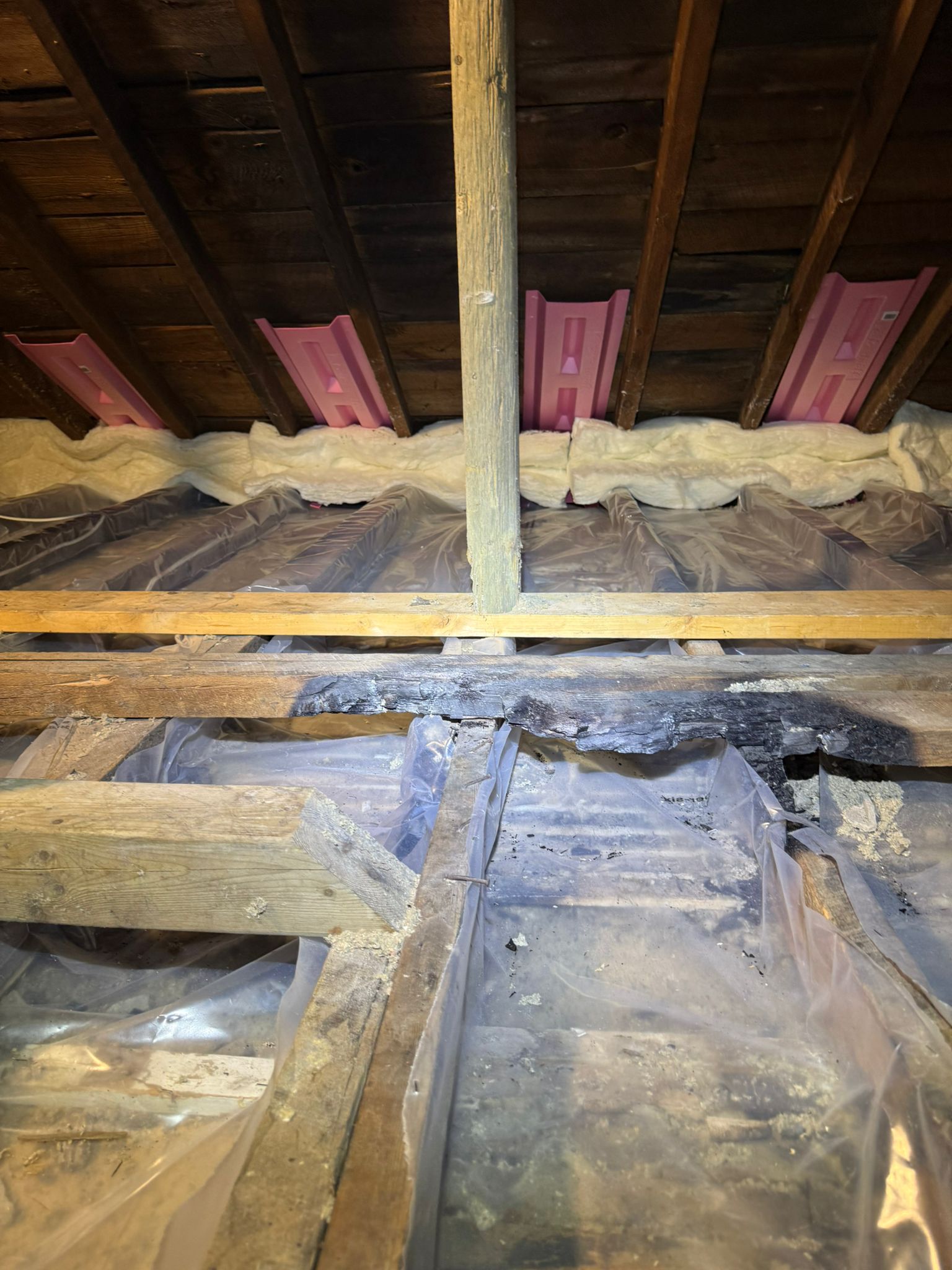
Galt’s older streets are full of century homes and early-1900s brick construction, built long before attic insulation standards existed in any meaningful form. Many of these attics were never upgraded past whatever loose fill was added decades ago, if anything was added at all. For homeowners in this part of the city, an insulation upgrade is often less about topping up and more about starting close to scratch.
Preston: A Different Era, A Similar Gap
Preston’s housing stock skews a bit later, with a strong run of mid-century homes built as the town grew through the 1940s and 1950s. These attics typically have some insulation, but it was installed to the standards of that period, not today’s. Combined with decades of settling, coverage that was borderline when installed is often inadequate now.
Hespeler: Growth Layered on an Old Mill Town
Hespeler retains its own historic centre near the Speed River, with newer infill and additions built around it over the years. That mix means Hespeler homes can present either problem — original attic spaces with minimal insulation, or newer additions where the insulation wasn’t properly tied into the original roofline, leaving a weak seam right where two roof sections meet.
Whichever of these three neighbourhoods you live in, the fix starts the same way: with a homeowner searching for attic insulation contractors in Cambridge who understand that “old house” here can mean three very different construction eras.
The Grand River Factor
Cambridge sits directly in the Grand River valley, and that geography brings higher ambient humidity than many neighbouring communities. Moist air is more likely to find its way into an attic through small gaps, and when it meets a cold roof deck in winter, it condenses. Over time that moisture can dampen insulation and encourage mould growth on roof sheathing, regardless of which of the three original towns the home was built in.
Ice Damming Ties It All Together
Every Waterloo Region winter brings the same cold snaps and freeze-thaw cycles, no matter which downtown a house started in. Natural Resources Canada’s Keeping the Heat In – Roofs and Attics guide explains how warm air leaking from the living space into the attic melts roof snow, which refreezes at the eaves as ice dams. Better attic insulation and air sealing address the cause, not just the icicles.
$1,250 Back Through Home Renovation Savings
Enbridge Gas, Save on Energy, and the Ontario government jointly fund the Home Renovation Savings program, which currently offers a $1,250 rebate for attic insulation upgrades, an increase from the previous $1,000. A standalone attic insulation project doesn’t require a home energy assessment to qualify. See homerenovationsavings.ca for the current terms.
Why Pro Insulation Contracting
Working across Galt, Preston, and Hespeler means we’re regularly in attics from three distinct construction periods, sometimes on the same street. We inspect first, seal air leaks before adding any new material, and size the insulation upgrade to the home’s actual era and condition rather than a one-size answer. We also manage the rebate paperwork for you.
Contact Pro Insulation Contracting to get your attic assessed, wherever in Cambridge you call home.